

Pick up a bag of specialty coffee and read the label. Chocolate. Jasmine. Red berries. Caramel. Sometimes something more specific: tomato, honey, raisin. None of it was added (by good roasters); it's just the roasted seed and hot water. So where does this entire pantry hidden in the liquid come from? The answer is more fascinating than any label can tell.
The key and the lock
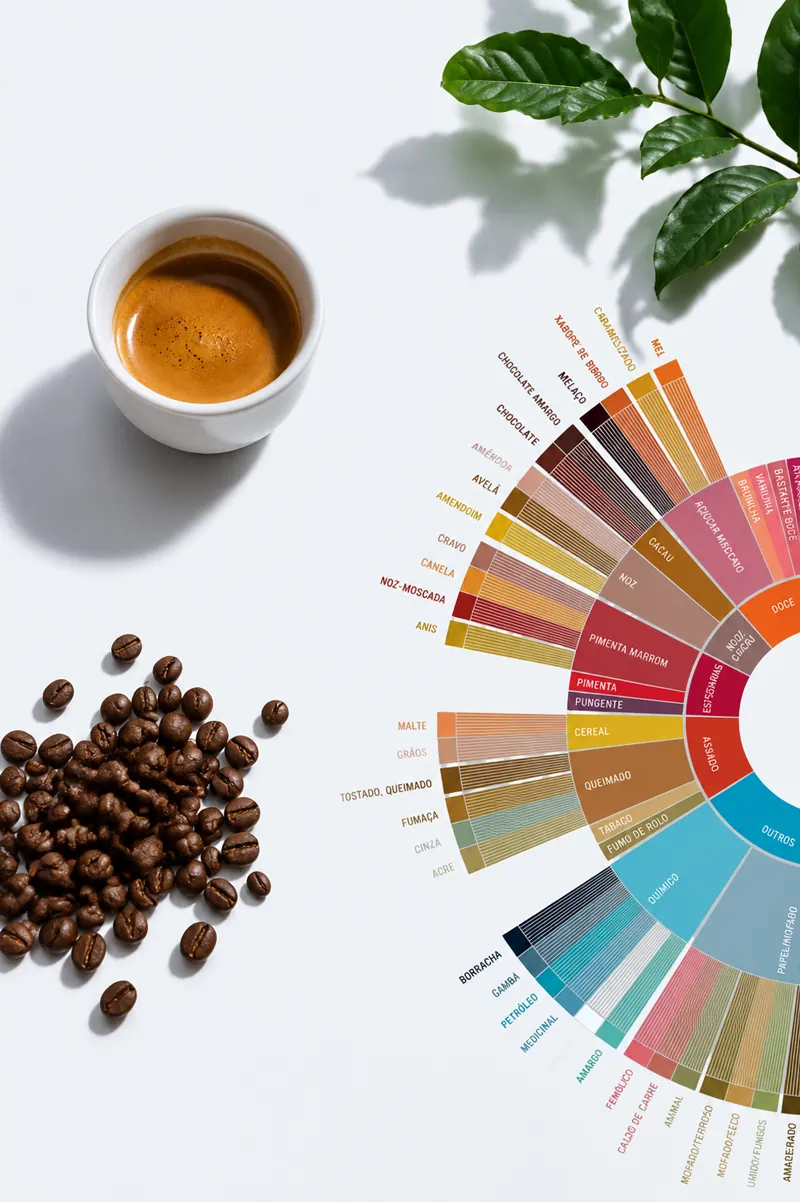
Start by imagining a lock. Every aroma you recognize in the world works like this: there is a molecule with a specific shape, the key, and a receptor in your body designed to fit exactly that shape. Right key in the right lock, and the brain receives the signal and gives it a name: "chocolate," "flower," "strawberry."
Here's the twist! Coffee isn't imitating these flavors. More often than not, it literally carries the same key. The molecule that smells like strawberry, the one that smells like chocolate, jasmine, peach or pineapple: all of them can exist inside the bean, produced by the plant or generated during roasting. Coffee and these flavors, through completely different biological paths, end up producing the same piece. And when it isn't the identical key, it's close enough to open the same lock. To your brain, the effect is the same.
You're not tasting coffee: you're smelling it
The second detail is the most surprising. Most of the time, you aren't tasting any of this. You're smelling it. The tongue is a modest instrument, distinguishing only five basic tastes: sweet, sour, salty, bitter, and umami. All the richness we call "flavor" is, in fact, aroma. When you swallow, vapors rise from your mouth to your nose through an internal pathway, and it's there, in the retronasal passage, that almost all the locks reside. That's why you experience an entire bouquet without being able to locate it on your tongue; it's because those flavors were never there.
The interesting thing is that smell depends on the volatility of molecules to reach olfactory receptors, while taste operates entirely by contact. That's why you can smell coffee from across the room, but only experience the full bouquet when it's in your mouth: that's where the retronasal aroma is released.
From fragrance to aftertaste
As you've noticed, the sensory perception of these keys, and which locks they open, is a dynamic process. It goes through fragrance at grinding, aroma when hot water is added, moves to flavor when the drink enters your mouth and triggers a combination of gustatory, retronasal olfactory, and tactile information, and ends with the aftertaste, which appears after ingestion when residues (especially lipids) form a thin layer on your tongue and palate.
The sweetness of coffee is (almost) an illusion
In this sensory dance, curiously, the famous sweetness of specialty coffee is largely an illusion. After roasting, the remaining sugars most likely don't reach the concentration threshold needed for the sweet receptors on your tongue to detect them. What happens is that when coffee compounds dissolved in water interact with the receptors on your taste buds, an intermodal perception is generated by aromas that the brain associates with sweet foods (like caramel or vanilla). Your brain, conditioned by a lifetime of experiences, projects the sensation of sweetness onto your mouth. You're not tasting the sugar; you're smelling the memory of it.
Terroir, process, and roast: where keys are born
And why does coffee, specifically, hold this arsenal? Because it's one of the most complex things we drink: hundreds of volatile molecules are born throughout the process. The good news is that this path is steerable. The variety and terroir define the original stock of keys. The drying process (washed, natural, fermented...) decides which ones accumulate. The roast is the final adjustment: light roasts preserve delicate, floral, and fruity keys; as the roast darkens, notes of chocolate, nuts, and caramel begin to emerge.
Water, temperature, and grind size decide the rest
However, roasting only creates the keys; what decides which keys actually end up in the lock is the water, in a synchronized dance between minerals (hardness and alkalinity) and temperature. Coffee flavor is not static; it's a moving target. Perception changes as the cup cools down. This happens because molecular volatility decreases, changing what rises to your nose, and our tongue's sensitivity to basic tastes varies with temperature.
And this orchestra is conducted by a maestro, grind size, which determines the speed and quality of the result. If water passes too quickly through too-coarse grounds, extraction is insufficient and the more complex, sweet keys are left behind. If water takes too long to travel its path, over-extraction occurs and bitter notes take over.
Virtue is the middle ground. Aristotle probably thought about this while tasting a great specialty coffee. He surely already knew that the range of flavors coffee provides isn't luck; it's a sequence of decisions, from the producer to the barista.
The last key is you
Finally, the most important layer is the coffee lover. What your brain stored wasn't the molecule, but the memory of a pattern with a name attached to it, with a nuance: the brain doesn't just access a file; it "fills in the gap." Our brain doesn't record everything with absolute precision; it uses past experiences, context, and patterns to guess or invent data when sensory information or memories are missing.
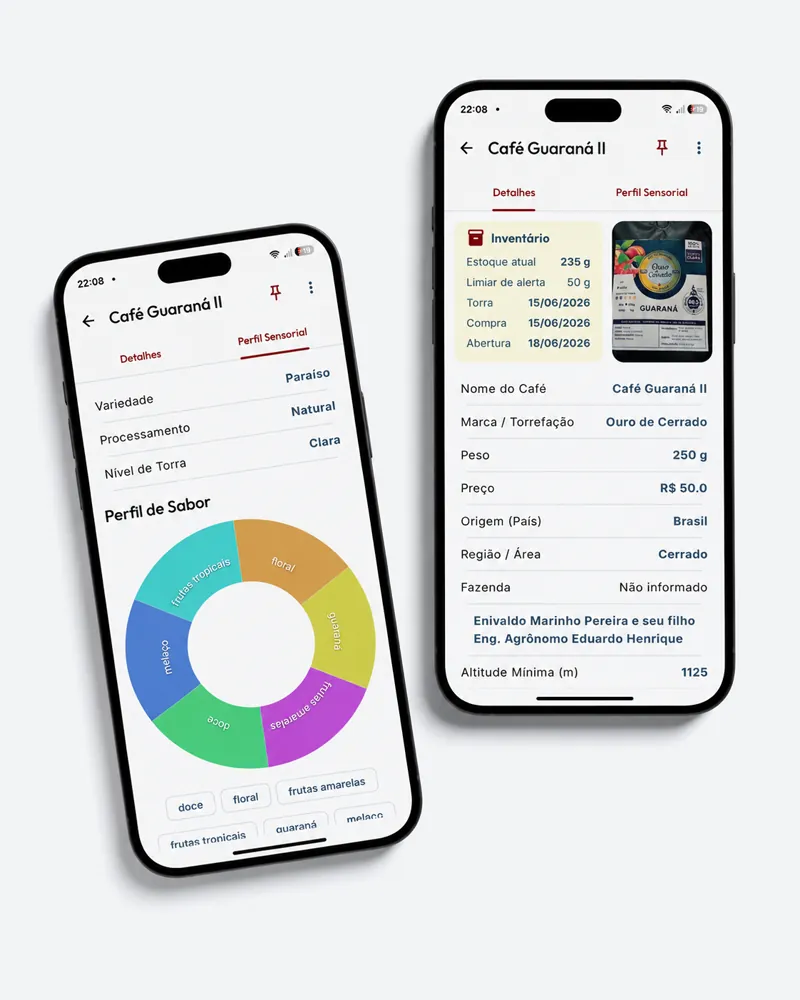
Just as we recognize a familiar face even in the dark, when sensing a molecule of vanillin, the brain completes the image and whispers "vanilla." That's why your list is never the same as mine: someone who ate a lot of strawberries locks in "strawberry"; another feels only "red fruit"; someone who has never tried apricot misses it entirely. It's also why the SCA flavor wheel exists: an attempt to make different people use the same word for the same cup.
In the end, that's it: coffee doesn't reproduce these flavors; it holds a set of keys that open, in your nose, the same locks that those foods would open. And behind each of those locks lies a memory of yours, the part no label can print.
Want to explore in practice how your palate recognizes different sensory notes? Coffee Codex helps you record and identify the flavors of every coffee you taste, with an interactive flavor wheel and complete sensory analysis.
Discover the flavors of your coffee
Download Coffee Codex and start exploring the universe of sensory notes in every cup.
Download Coffee Codex